

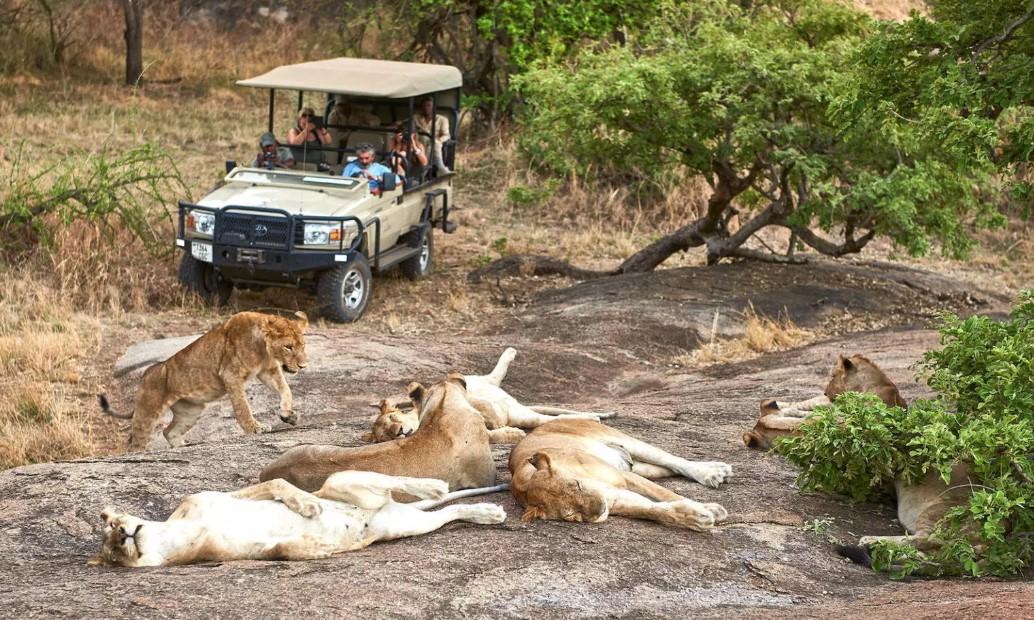
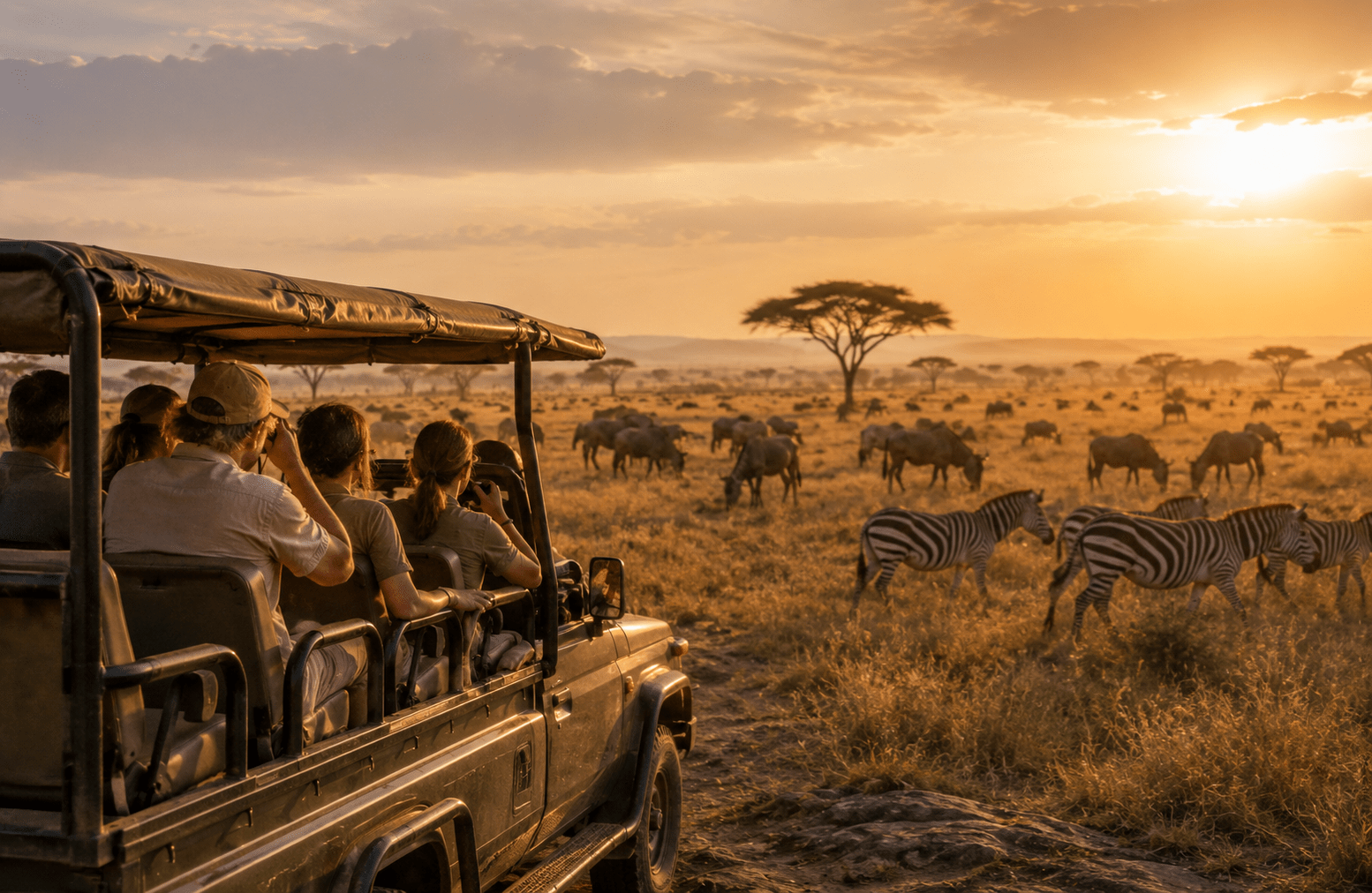
Imagine waking before sunrise to the distant roar of a lion, watching elephants move silently beneath Mount Kilimanjaro by afternoon, and ending another day beneath a Serengeti sky so crowded with stars that darkness never feels empty.
That is the appeal of a Kenya and Tanzania Safari 2026.
But what makes these two East African countries truly special is not simply the number of lions, elephants, giraffes or wildebeest you can see. It is the variety of experiences packed into one region.
Kenya gives travelers legendary destinations such as the Maasai Mara, Amboseli, Tsavo, Samburu and Laikipia. Cross into Tanzania, and the landscape continues through the Serengeti, Ngorongoro, Tarangire and beyond.
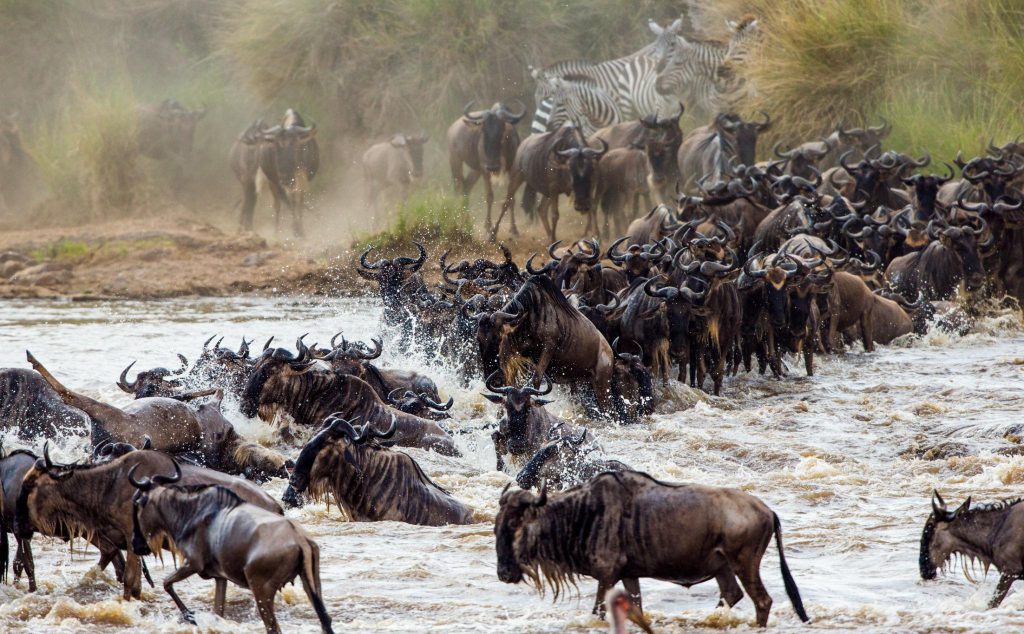
In fact, the famous Serengeti and Maasai Mara should not really be thought of as two completely separate safari destinations. They form part of one vast ecological system through which wildlife has moved for generations. UNESCO describes the wider Serengeti ecosystem as extending northward into Kenya’s Maasai Mara.
That is the first secret to planning an exceptional East African safari: stop thinking about Kenya versus Tanzania and start thinking about Kenya plus Tanzania.
travelers frequently ask whether Kenya or Tanzania offers the better safari.
There is no universal winner.
They provide different versions of the East African safari experience, and combining them can create a journey that is stronger than either destination alone.
| Safari Feature | Kenya | Tanzania |
|---|---|---|
| Iconic safari destination | Maasai Mara | Serengeti |
| Great Migration | Excellent, especially Jul–Oct | Excellent across different migration stages |
| Big Five opportunities | Excellent | Excellent |
| Elephant experiences | Outstanding in Amboseli | Excellent in Tarangire |
| Dramatic landscape | Amboseli, Samburu, Rift Valley | Serengeti, Ngorongoro, Kilimanjaro region |
| Rhino opportunities | Strong in Laikipia and Lake Nakuru | Particularly notable in Ngorongoro |
| Safari + beach | Kenyan Coast | Zanzibar, Pemba and Mafia |
| Community/conservancy experiences | Particularly strong | Growing eco-tourism offering |
| Ideal trip style | Diverse circuits and conservancies | Vast wilderness and classic safari circuits |
Kenya often feels more varied over shorter distances. Tanzania, meanwhile, offers an extraordinary sense of scale—particularly across its northern safari circuit.
The better question is therefore not “Which country should I choose?” but “Which combination of ecosystems matches the wildlife experience I want?”
Few wildlife events communicate the scale of East Africa better than the Great Migration.
The herds move through the greater Serengeti-Mara ecosystem following rainfall, grazing conditions and water rather than national borders. This is exactly why a combined Kenya-Tanzania itinerary makes so much sense.
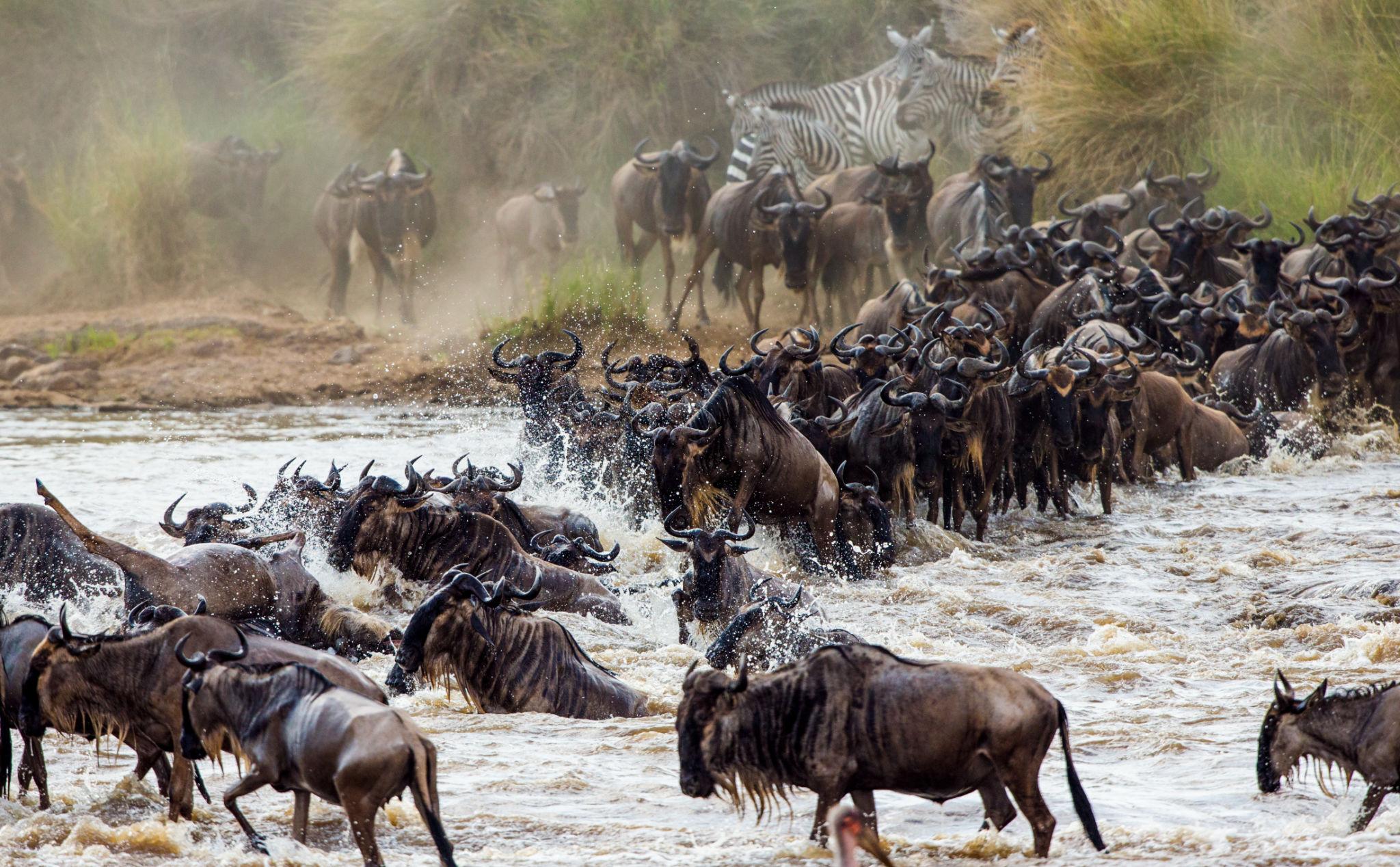
During part of the year, the action centers on Tanzania’s Serengeti. Later, large herds move north and the Maasai Mara becomes one of the great stages of the migration.
Kenya Tourism Board highlights July to October as the period associated with the most dramatic Mara River migration activity in Kenya, including the famous crossings.
Yet river crossings should not become the only objective of a migration safari.
One of the most important pieces of safari advice for 2026 is this:
Wildlife does not operate according to a tourist timetable.
Rainfall influences the movement of animals. A river crossing cannot be scheduled for 10:30 a.m. on your third day simply because your itinerary says “migration safari.”
A knowledgeable guide, sufficient time in the ecosystem and realistic expectations are often more valuable than chasing a single photograph.
Kenya Safari Cost range in 2026: Full Budget & Luxury Price Guide
The Maasai Mara’s reputation is closely associated with wildebeest, but treating the reserve purely as a migration destination undersells it.
Its grasslands, river systems and predator-rich ecosystem make it an outstanding wildlife destination beyond the peak migration months.
Lions, cheetahs, elephants, giraffes, hyenas, hippos and numerous antelope species can all form part of the experience. The wider Mara region also includes private and community conservancies where safari styles may include guided walks, cultural experiences and lower-density wildlife viewing.
This introduces another important idea for a Kenya and Tanzania Safari 2026: quality should be measured in time and depth, not simply the number of animals checked off a list.
Three hours watching a lion pride interact can tell you more about the African bush than racing between ten sightings simply to photograph each species.
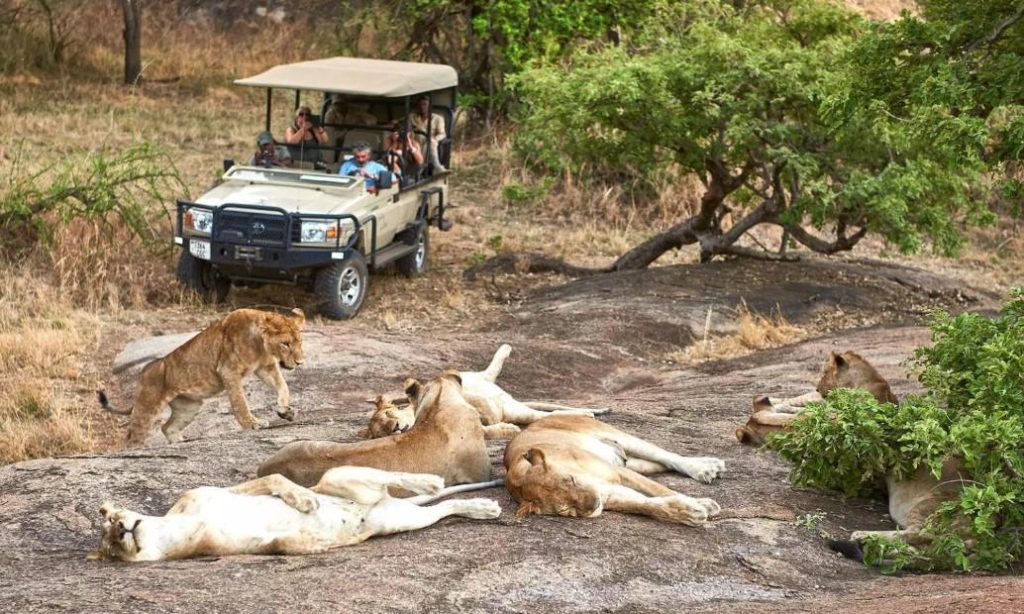
If the Maasai Mara delivers intensity, the Serengeti delivers scale.
Tanzania’s official tourism platform describes the Serengeti as one of the country’s signature safari landscapes and the setting for the Great Migration. UNESCO identifies it as the heart of the wider Serengeti ecosystem.
Drive across the plains and distance begins to feel different.
A herd appearing small on the horizon may contain hundreds of animals. A lone acacia tree can dominate a landscape stretching farther than the eye can comfortably judge.
Then there are the predators.
Lions, cheetahs, leopards and hyenas occupy the same ecological theater as wildebeest, zebra, gazelle and other herbivores. Safari becomes less about spotting isolated animals and more about observing the relationships between them.
That difference matters.
The finest safari guides do not merely point and say, “There is a lion.” They help you understand why that lion is lying there, what it is watching and what may happen next.
Few landscapes provide an entrance quite like the Ngorongoro Conservation Area.
The wider conservation area covers more than 800,000 hectares of highland plains, savanna, woodland and forest. It also represents an unusual multiple-land-use landscape where wildlife and pastoral communities have historically coexisted.
Then comes the crater itself.
Descending from the rim onto the crater floor feels almost like entering a self-contained wildlife world.
The Tanzania Tourism Board describes Ngorongoro as one of Africa’s outstanding places for seeing the Big Five within a relatively compact and dramatic landscape.
Ngorongoro also adds something the open Serengeti cannot: contrast.
That contrast is critical to a great safari itinerary. After several days of immense plains, descending into a volcanic landscape resets your senses and makes the next experience feel new again.
Modern safari planning should also look beyond photographs.
Conservation areas are landscapes where wildlife protection, tourism, livelihoods and local communities intersect. In 2026, UNESCO has continued to emphasize consultation with stakeholders in matters affecting communities within the Ngorongoro Conservation Area.
Choosing responsible operators, locally connected guides and accommodation with credible conservation or community policies can make tourism more meaningful.
There are wildlife photographs, and then there is an elephant standing beneath Mount Kilimanjaro.
That image alone has helped make Amboseli National Park one of Kenya’s signature safari destinations.
The Kenya Wildlife Service describes Amboseli as a premier destination for close encounters with large elephant herds. Its ecosystem combines grasslands, woodland, marshes and swamps, supporting diverse wildlife and birdlife.
Amboseli works particularly well in a Kenya-Tanzania itinerary because it provides another dramatic change in scenery.
A journey might move from Kenya’s highlands to Amboseli’s elephant country, across the border into northern Tanzania and onward toward Tarangire, Ngorongoro and the Serengeti.
The animals remain extraordinary, but the landscape keeps changing around them.
That is what prevents a longer safari from becoming repetitive.
Many first-time visitors recognise Serengeti and Ngorongoro immediately.
Tarangire often receives less attention.
That can be a mistake.
Tanzania’s northern circuit pairs Tarangire with Ngorongoro and Serengeti, while the country’s tourism authority specifically highlights Tarangire’s elephant herds as one of the circuit’s attractions.
Its baobabs also give the park a visual identity completely different from the Serengeti.
A carefully designed safari therefore should not simply connect famous names. It should build a rhythm of contrasting environments.
That may be one of the biggest differences between an ordinary safari itinerary and a memorable one.
Another reason Kenya and Tanzania work so well together is what happens after the wildlife safari.
Tanzania can transition naturally from the Serengeti and Ngorongoro to Zanzibar, where travelers can exchange dusty safari roads for beaches, Swahili culture, seafood and the historic atmosphere of Stone Town. Tanzania’s tourism authority actively promotes safari-and-beach combinations as part of the country’s travel offering.
Kenya offers the same possibility on its Indian Ocean coastline, including areas such as Diani, Watamu and the wider Swahili coast.
This creates one of Africa’s most satisfying travel combinations:
adrenaline first, relaxation second.
After a week of 5:30 a.m. game-drive departures, a few days listening to the Indian Ocean can feel very well earned.
There is no single “best” month because different seasons produce different experiences.
| Period | Particularly Good For |
|---|---|
| January–March | Southern Serengeti wildlife and calving-season experiences |
| April–May | Greener scenery and travellers comfortable with wetter conditions |
| June | Transition toward the drier safari season |
| July–October | Northern Serengeti, Maasai Mara and migration-season excitement |
| November–December | Greener landscapes, returning rains and different migration movements |
Tanzania’s long-term climate pattern generally becomes relatively drier from June through September, while Kenya promotes the Maasai Mara’s major migration period from roughly July through October.
But migration patterns ultimately respond to environmental conditions, so exact wildlife locations can vary.
Instead of asking only, “What is the best month for safari?”, decide what matters most:
Then build the trip around that priority.
The fundamentals that made Kenya and Tanzania legendary safari destinations remain remarkably strong in 2026: immense protected landscapes, globally important wildlife ecosystems, established guiding traditions and an increasingly diverse range of safari experiences.
Both countries are also presenting safari as more than vehicle-based wildlife viewing.
Kenya promotes experiences ranging from walking safaris and conservation encounters to community-led tourism, while Tanzania’s tourism authority highlights eco-tourism, cultural experiences, hiking, beaches and low-impact travel alongside classic wildlife safaris.
This gives today’s traveler more freedom.
Your safari can be luxurious without being isolated from the destination. Adventurous without being uncomfortable. Wildlife-focused without ignoring culture. And memorable without requiring every day to look identical.
Perhaps the biggest mistake when planning an East African safari is reducing the decision to Kenya vs Tanzania.
Nature never agreed to that division.
Wildebeest cross the border. Elephants move through trans boundary ecosystems. Landscapes, cultures and wildlife histories overlap.
A Kenya and Tanzania Safari 2026 allows travelers to experience that bigger story.
Start with elephants beneath Kilimanjaro in Amboseli. Watch predators patrol the Maasai Mara. Follow the ecosystem south into the Serengeti. Descend into Ngorongoro. Stand beneath the baobabs of Tarangire. Then, if time allows, finish beside the Indian Ocean.
That is not simply a collection of destinations.
It is a journey through some of the landscapes that created the very idea of an African safari.
The best safari is not necessarily the one with the longest itinerary or the most expensive lodge. It is the one designed around when you travel, what you want to see and how deeply you want to experience each destination.
Whether your dream is witnessing the Great Migration, photographing the Big Five, watching elephants below Kilimanjaro, exploring Ngorongoro or combining the Serengeti with a tropical beach, Kenya and Tanzania offer extraordinary possibilities.
Ready to turn that dream into an itinerary? Explore our Kenya and Tanzania safari packages, by contacting our safari experts to start planning your Kenya and Tanzania Safari 2026.
And if you’ve already experienced East Africa, tell us in the comments: Kenya, Tanzania, or both? 🦁🐘🌍
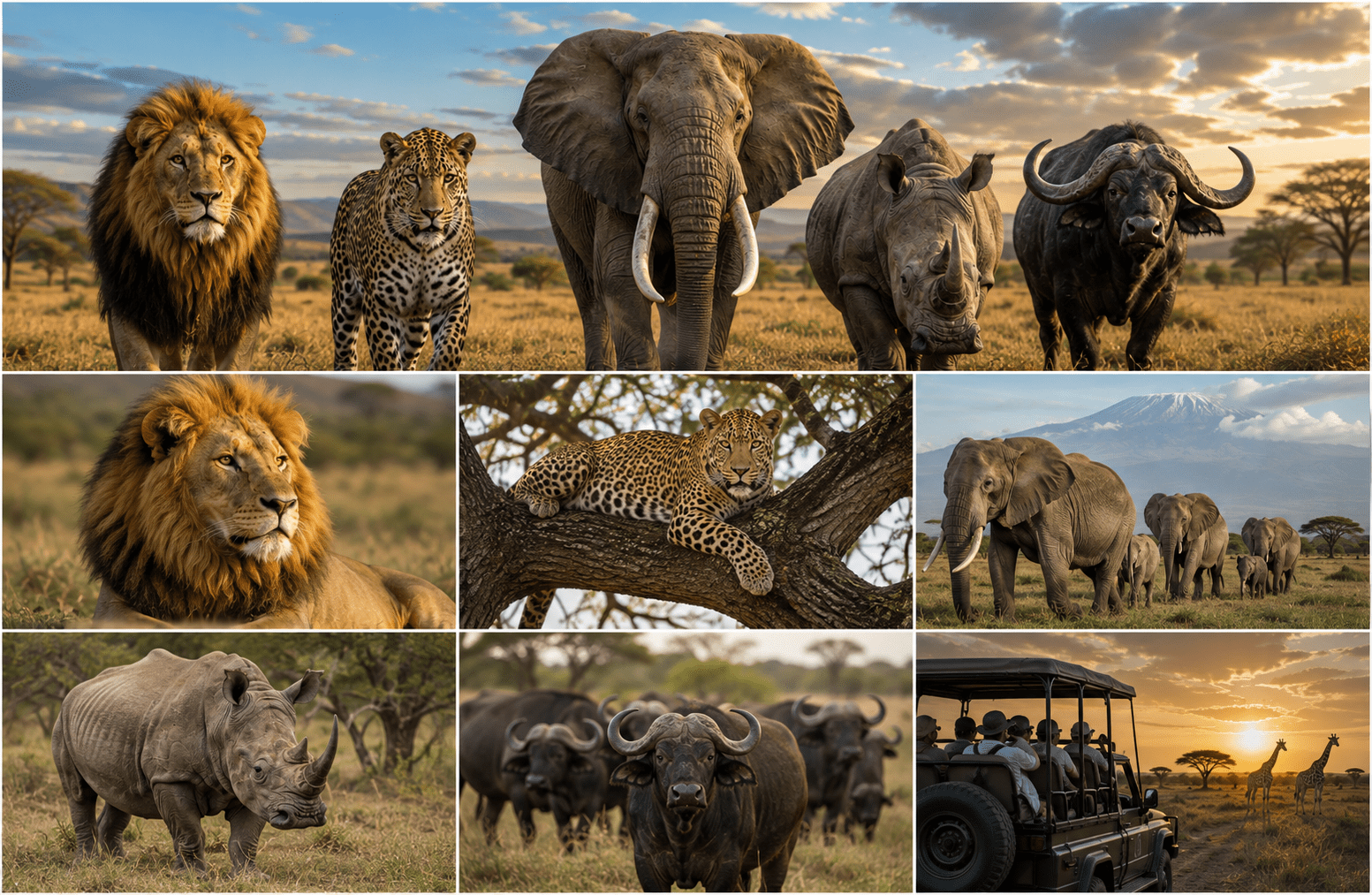
A Big Five Safari often begins with a simple dream: seeing a lion, leopard, elephant, rhino and buffalo roaming freely in the African wilderness. But the moment you actually arrive on the savannah, something changes the checklist suddenly feels far less important than the experience unfolding
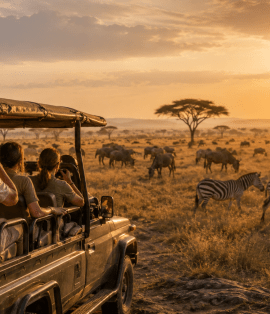
Choosing between a Luxury vs Budget Safari can feel like choosing between two completely different versions of Africa. One promises elegant tented suites, private guides, fine dining and flights between remote camps. The other may involve shared vehicles, simpler lodges, road transfers and nights beneath canvas.
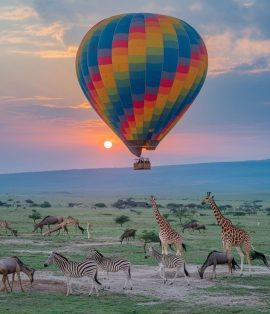
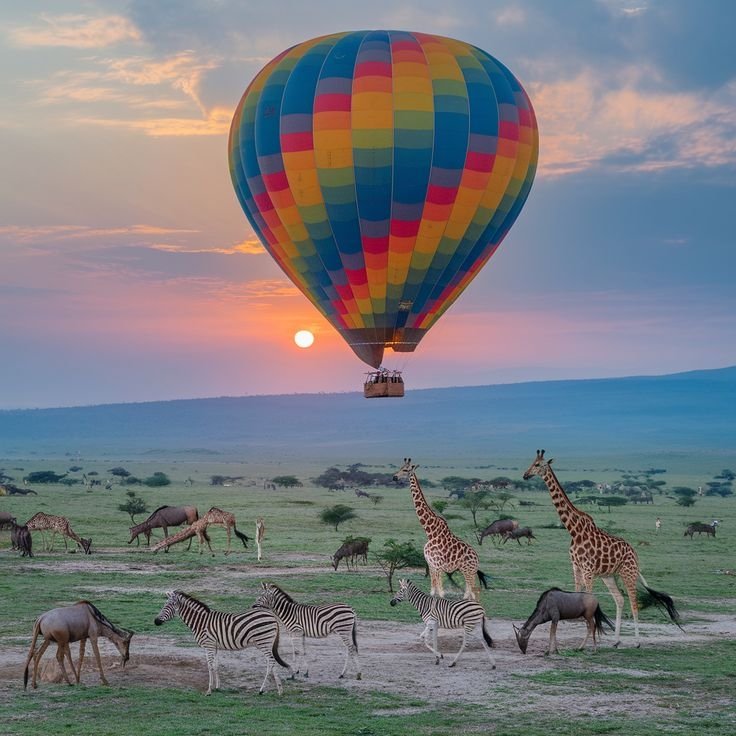
The best safari experiences in Africa are not simply about seeing as many animals as possible. A truly memorable safari changes the way you experience the wilderness—watching wildebeest cross a river, walking through the bush on foot, floating silently above the Maasai Mara or sitting metres