

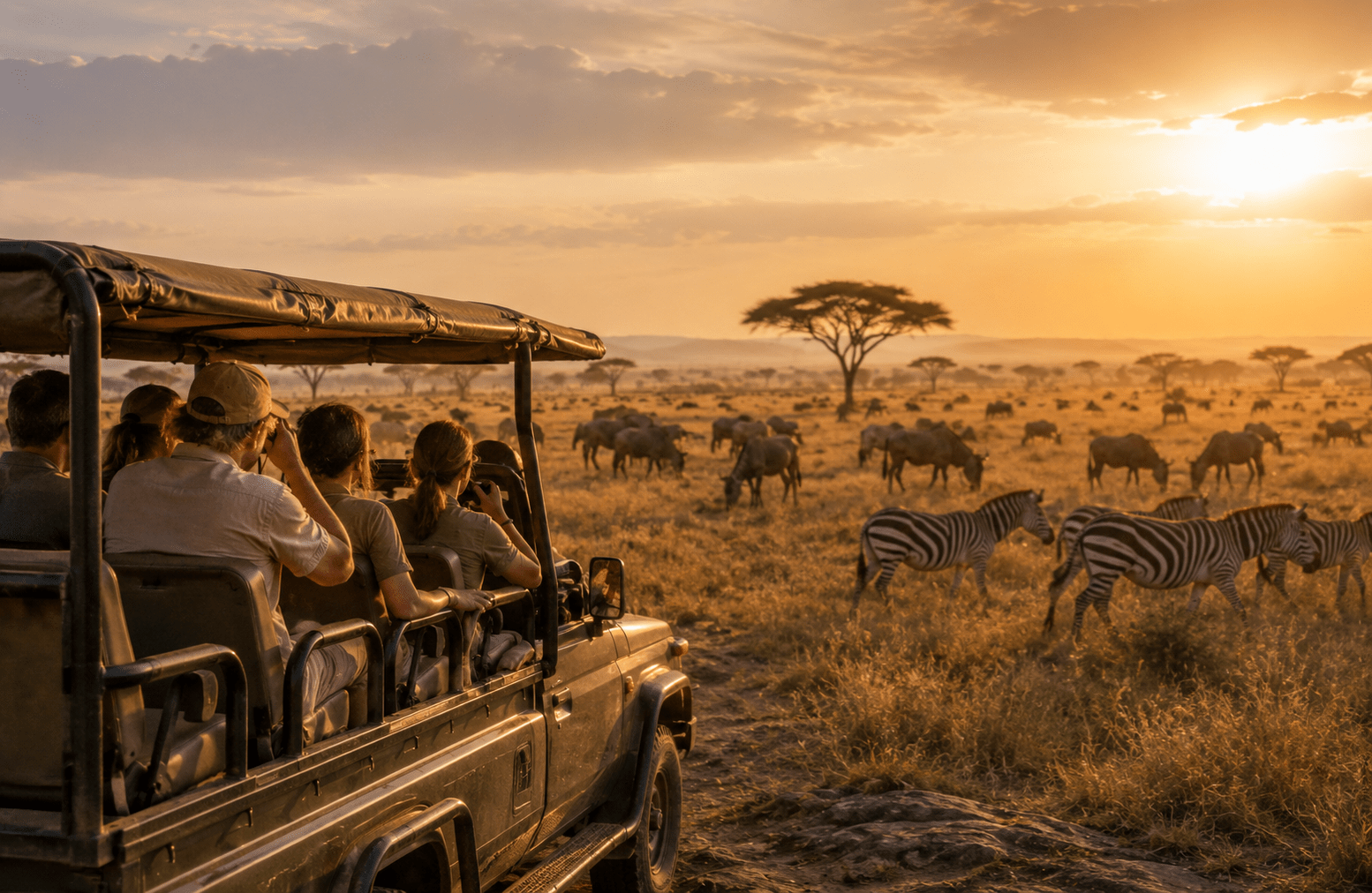
Choosing between a Luxury vs Budget Safari can feel like choosing between two completely different versions of Africa. One promises elegant tented suites, private guides, fine dining and flights between remote camps. The other may involve shared vehicles, simpler lodges, road transfers and nights beneath canvas.
But here is the surprise: the lion does not know how much you paid for your room.
A traveller staying in a modest tent can sometimes watch the same elephant herd, cheetah hunt or wildebeest migration as someone paying several times more at a luxury camp nearby.
So why can one safari cost hundreds of dollars per day while another runs into four figures?
Because safari pricing is not simply about wildlife. You are also paying for privacy, location, time, logistics, exclusivity, accommodation and service.
Understanding that difference is the key to deciding which safari style is genuinely right for you in 2026.
| Feature | Budget Safari | Luxury Safari |
|---|---|---|
| Wildlife viewing | Excellent in the right location | Excellent, often with greater flexibility |
| Accommodation | Campsites, simple tents or lodges | High-end tented camps and lodges |
| Safari vehicle | Often shared | Frequently private |
| Guide | Shared with group in many packages | Often private or very small group |
| Transfers | Mostly by road | Road and/or scheduled charter flights |
| Meals | Simple but filling | Gourmet or premium dining |
| Location | May be outside or farther from prime areas | Often strategically positioned |
| Schedule flexibility | Usually fixed around the group | Highly flexible |
| Activities | Standard game drives | May include walks, night drives, sundowners or private experiences |
| Service | Functional | Highly personalised |
| Best for | Value-focused travellers | Privacy, comfort and convenience |
| Biggest advantage | More safari for less money | More control over your safari |
The right choice is therefore not necessarily determined by how much you can afford.
It depends on what you value once you arrive in Africa.
Safari prices vary considerably according to destination, season, group size, accommodation and whether the itinerary is private.
Current SafariBookings benchmarks illustrate the difference.
For Kenya, the platform estimates an average group budget safari at about US$200 per person per day, compared with approximately US$550 for group luxury. Private trips average around US$250 for budget and US$650 for luxury.
For Tanzania, current estimates are approximately US$250 per person per day for a group budget safari and US$600 for group luxury, while private equivalents average around US$300 and US$700 respectively.
These are guidelines not quotations.
Peak Great Migration dates, exclusive lodges, charter flights and private concessions can push luxury prices far higher. At the other end, travelling in a group and choosing simpler accommodation can reduce costs significantly.
| Safari Style | Kenya Approx. Per Person/Day | Tanzania Approx. Per Person/Day |
| Budget – Group | $200 | $250 |
| Budget – Private | $250 | $300 |
| Mid-range – Group | $300 | $375 |
| Mid-range – Private | $350 | $425 |
| Luxury – Group | $550 | $600 |
| Luxury – Private | $650 | $700 |
| Luxury Plus | $1,100+ | $1,100+ |
Figures are broad planning benchmarks and can change according to season, itinerary, accommodation and inclusions.
The important question is therefore not simply, “Which safari is cheaper?”
It is:
What do I receive for the extra money?
Forget the idea that “budget safari” automatically means uncomfortable tents, bad food and unreliable vehicles.
There is an enormous range within the budget category.
A budget traveller might stay in:
In Kenya, budget accommodation ranges from simple mobile tents to inexpensive lodges and more comfortable basic tented camps.
Tanzania also permits camping inside several national parks. Budget trips are relatively expensive compared with ordinary backpacking holidays because safari operators still have to cover park fees, trained guides, food, fuel and specialised 4×4 vehicles.
That is an important point.
For example, Kenya’s current conservation fee structure lists non-resident adult entry at US$90 for Amboseli National Park and US$80 for Tsavo East or Tsavo West.
Those fees apply regardless of whether you sleep in a basic tent or a luxury suite.
The budget safari therefore saves money mainly by reducing costs around accommodation, transportation, exclusivity and service rather than eliminating the fundamental cost of entering and operating inside wildlife areas.
One of the biggest advantages is simple:
Imagine having a choice between:
Three nights of high luxury
or
Seven nights in comfortable budget or mid-range accommodation.
For someone primarily interested in wildlife photography, the second option might provide considerably more value.
Wildlife encounters depend heavily on time in the field.
The longer you spend in the Maasai Mara, Serengeti, Amboseli or Tarangire, the greater your opportunities to encounter interesting behaviour.
Another advantage is atmosphere.
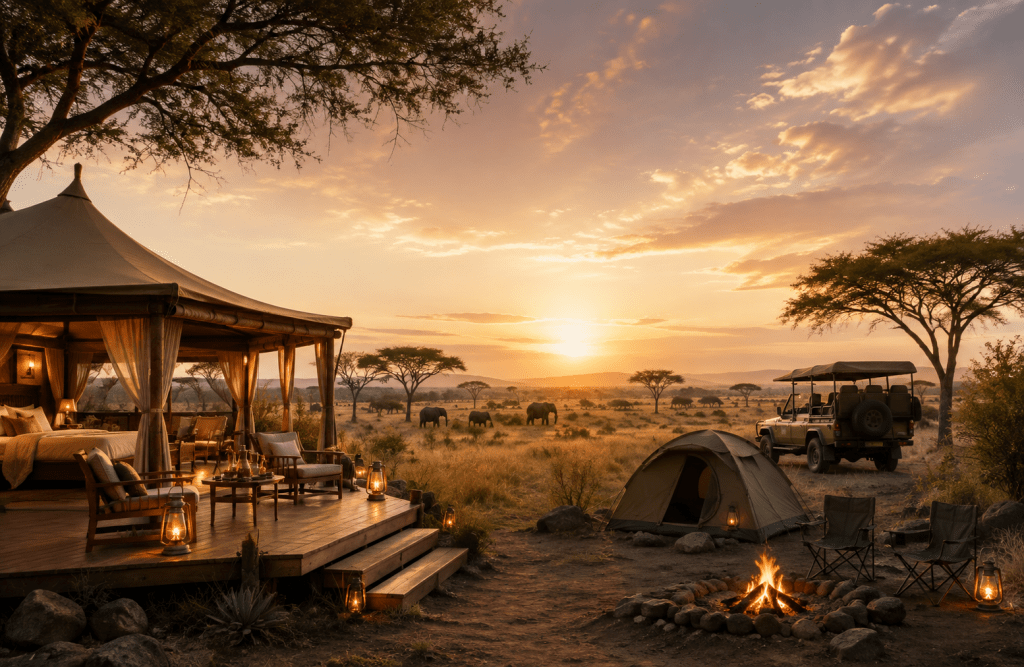
Camping allows you to hear the wilderness in a way that a sealed hotel room cannot replicate.
At night, you might hear hyenas calling in the distance, zebras grazing beyond camp or lions roaring somewhere across the plains.
Simple does not necessarily mean inferior.
Sometimes it means closer to the experience you travelled to Africa for.
There are trade-offs.
Shared safari vehicles are one of the most significant.
If six travellers share the same vehicle, six people also share decisions.
You may want to spend another hour photographing a leopard, while someone else wants to return to camp.
You may prefer leaving at 5:45 a.m., while the rest of the group agrees on 7:00.
That matters more than many first-time travellers realise.
Budget accommodation can also be farther from prime wildlife areas. A lodge outside a reserve may be excellent value, but entering the park every morning can consume valuable wildlife-viewing time.
Road transfers are another consideration.
Travelling overland saves money and allows you to see more of the countryside, but long transfers can consume significant portions of your holiday.
This is where the Luxury vs Budget Safari debate becomes less about marble bathrooms and more about how efficiently you use your time.
Luxury safari pricing is often misunderstood.
Yes, part of the premium pays for beautiful accommodation.
You may get a large canvas suite, private deck, plunge pool, exceptional meals, premium drinks and attentive service.
But some of the most valuable luxuries have nothing to do with the room.
High-end camps frequently command excellent locations close to wildlife-rich areas.
That can mean spending less time commuting and more time on safari.
During the Great Migration, being correctly positioned within the Serengeti-Mara ecosystem can matter more than whether your tent has a bathtub.
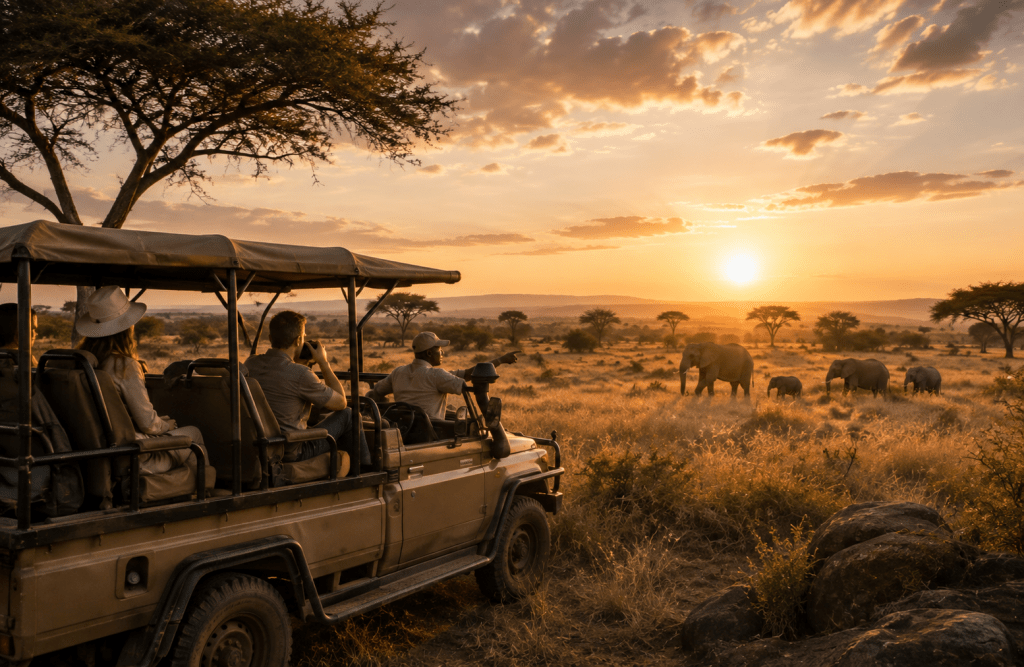
A private vehicle can completely change the experience.
You decide when to leave.
You decide when to return.
You decide whether to spend two hours watching cheetahs or ten minutes.
For photographers, this freedom can sometimes be worth more than upgrading the accommodation itself.
Luxury itineraries often use light aircraft to move between safari areas.
Tanzania’s current official tourism offerings, for example, include safari itineraries using flights into the Serengeti before game drives begin.
A journey that takes many hours by road can sometimes become a relatively short flight.
For a traveller with only seven days in Africa, that saved time can be extremely valuable.
Smaller camps can provide high staff-to-guest ratios, flexible meals, private dining, laundry and personalised activities.
Luxury in the bush is often less about extravagance and more about removing friction from the journey.
Not automatically.
This may be the most important takeaway in this article.
Paying more does not guarantee better wildlife.
A lion may walk directly past a budget safari vehicle and remain hidden in the grass when the luxury vehicle arrives fifteen minutes later.
Nature remains unpredictable.
However, luxury can improve your opportunity to experience wildlife well.
A strategically located camp may get you into the field earlier.
A private guide may stay longer at a sighting.
A private vehicle can position itself according to your photographic interests.
And camps in private conservancies or concessions may offer activities unavailable in some national parks.
So the distinction is:
Luxury cannot buy wildlife, but it can buy better conditions for experiencing it.
That is a far more useful way to think about safari pricing.
A luxury safari becomes particularly attractive when your most limited resource is time rather than money.
Consider spending more if:
Luxury is also valuable for multi-generational families where comfort and logistics can determine whether everyone actually enjoys the trip.
Choose budget if your priority is maximum wildlife experience per dollar.
It can be particularly suitable if:
For younger travellers, solo adventurers and anyone who cares more about what happens outside the tent than inside it, a carefully selected budget safari can be outstanding.
Here is the part often missing from the Luxury vs Budget Safari conversation.
You do not have to choose either extreme.
For many travellers, mid-range safari is the sweet spot.
You can often get:
Current planning benchmarks place mid-range Kenya safaris around US$300–350 per person per day and Tanzania around US$375–425, depending on whether they are group or private trips.
For travellers who want comfort without paying heavily for ultra-premium services, this category often provides exceptional value.
10 Best Safari Experiences in Africa for 2026
If I were designing a safari for value rather than simply choosing “budget” or “luxury,” I would use a hybrid strategy.
A good guide
A great guide can transform ordinary wildlife viewing into an understanding of animal behaviour and ecology.
The right location
A simple camp in the right place can be better than a luxury lodge two hours away.
A private vehicle when it matters
Especially for photographers, families and travellers with specific wildlife priorities.
Critical migration nights
If you are visiting for the Great Migration, spend more to position yourself where the herds are expected.
Unnecessary room upgrades
You may spend most daylight hours outside your accommodation anyway.
Flying every sector
Mix flights with scenic road transfers.
Peak season where unnecessary
Shoulder seasons can offer excellent wildlife and lower prices.
Luxury every single night
Mixing accommodation categories can dramatically improve value.
That produces something better than either extreme:
Use this simple decision guide.
You want more days, more destinations and lower overall cost, and you are comfortable sacrificing some privacy and luxury.
You want privacy, efficiency, exclusivity, personalised service and maximum control over your time.
You want excellent wildlife viewing and comfortable accommodation without paying heavily for premium extras.
You want the strongest overall value.
For many travellers, this is what I would recommend.
Spend more where it directly improves the safari experience and save where the upgrade adds little to what matters to you.
The Luxury vs Budget Safari decision should never begin with the assumption that expensive automatically means memorable.
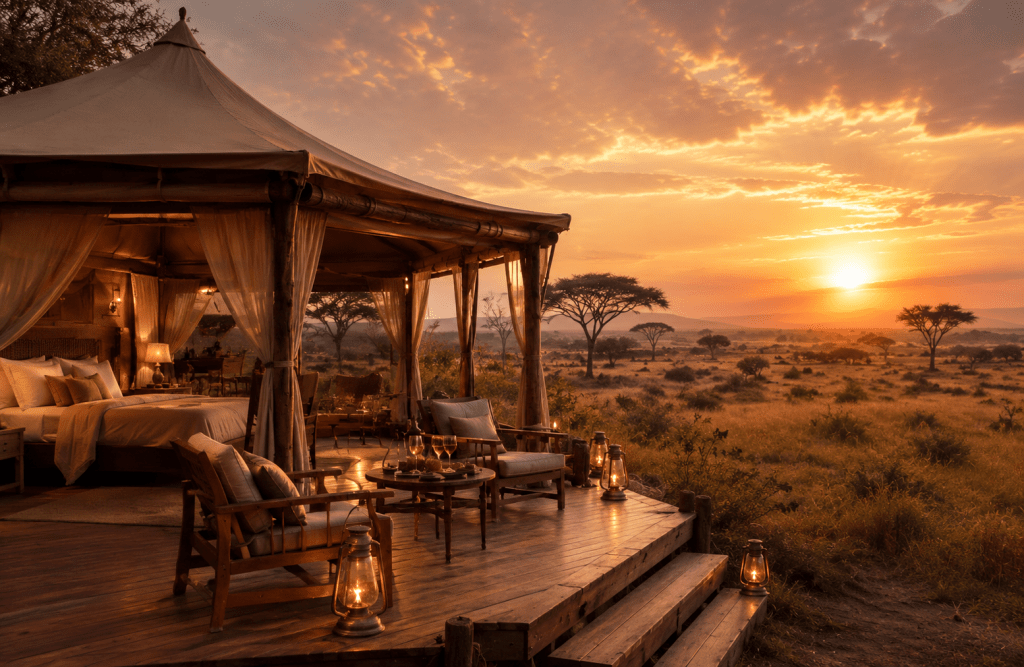
Safari is unusual because the greatest luxury is often not a swimming pool, a bottle of champagne or a large suite.
It is time.
Time to wait beside a leopard.
Time to follow an elephant family.
Time to watch the sun rise across the Serengeti.
Time to sit quietly rather than rushing toward the next sighting.
A luxury safari can provide privacy, convenience and extraordinary comfort. A budget safari can deliver adventure, authenticity and excellent wildlife at a more accessible price. Mid-range and hybrid trips can offer the best of both worlds.
So before deciding how much to spend, ask yourself one question:
What do I want my money to improve?
If the answer is privacy and convenience, invest in luxury.
If the answer is more days watching wildlife, consider spending less per night and staying longer.
Because once you are watching a lion walk across the African savannah at sunrise, the wilderness rarely asks which room category you booked.
Whether you want an intimate luxury camp overlooking the Serengeti, a value-focused adventure through Kenya or a carefully balanced combination of both, the best safari begins with matching the itinerary to your priorities, travel dates and budget.
Explore our Kenya Safari Packages, discover our Tanzania Safari Tours, or speak with our safari specialists about designing a personalised African safari for 2026.
Would you spend more on the lodge, the private vehicle or extra safari days?
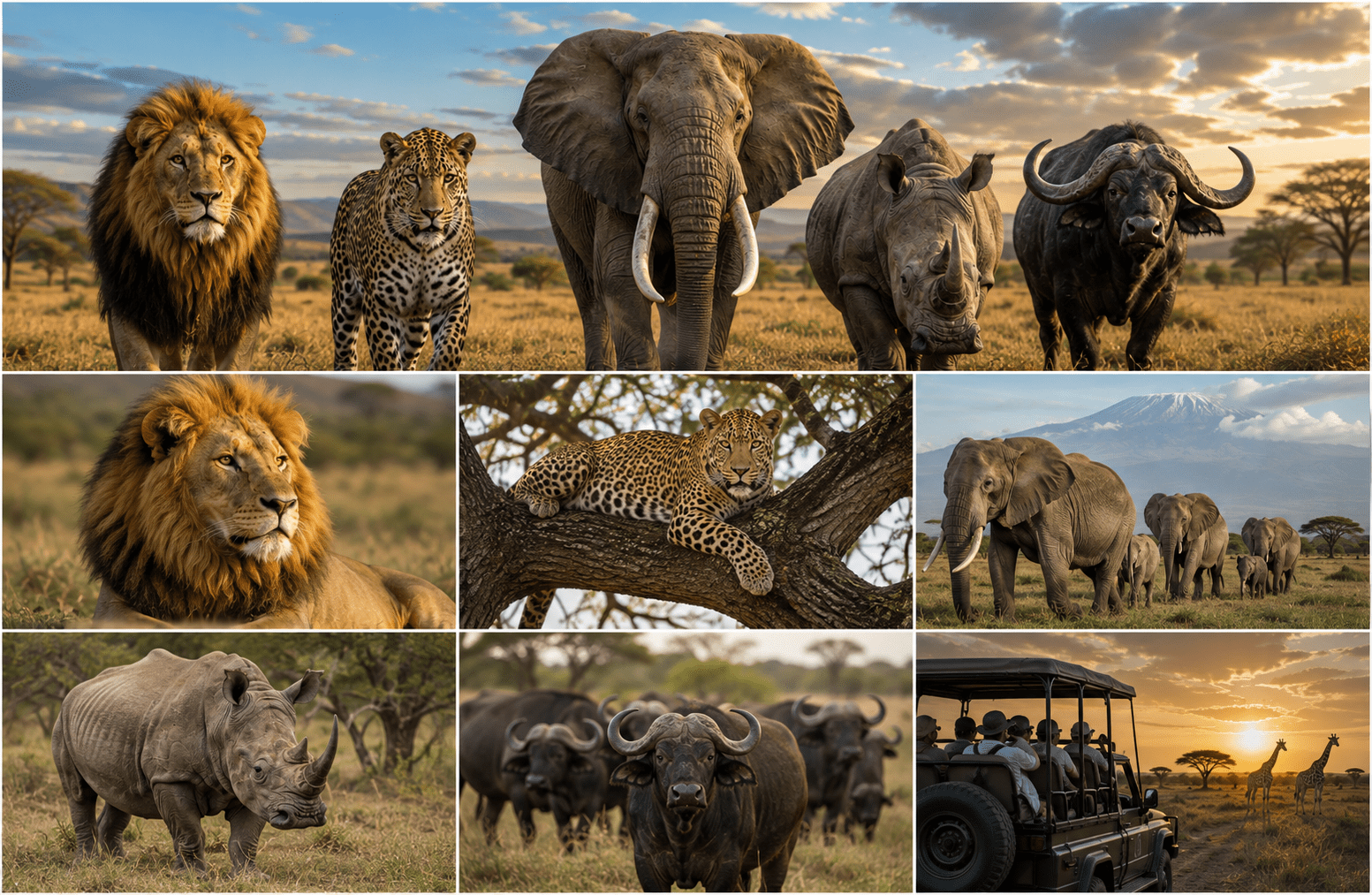
A Big Five Safari often begins with a simple dream: seeing a lion, leopard, elephant, rhino and buffalo roaming freely in the African wilderness. But the moment you actually arrive on the savannah, something changes the checklist suddenly feels far less important than the experience unfolding
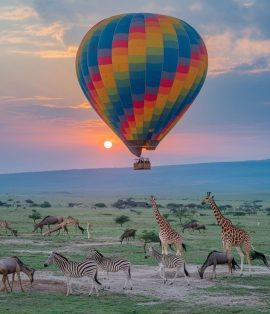
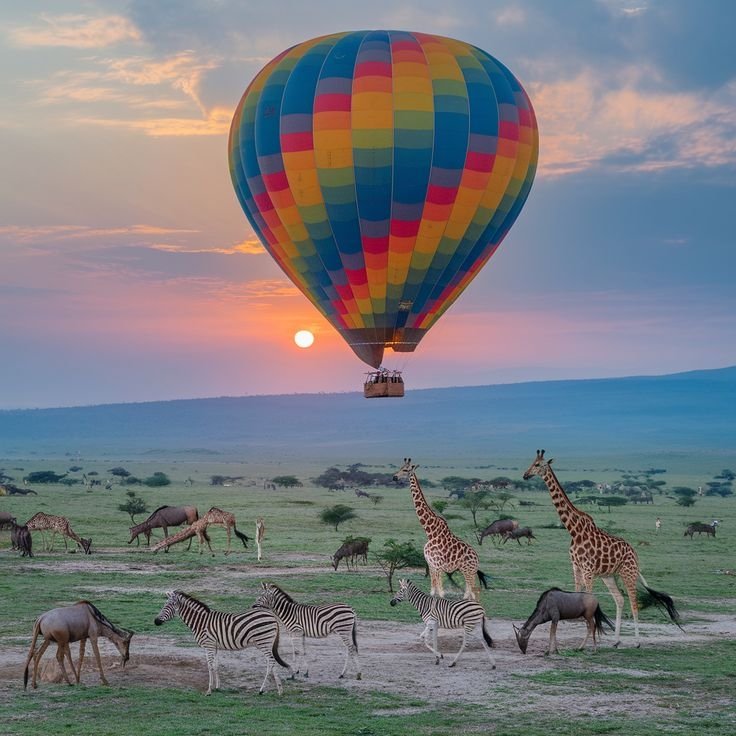
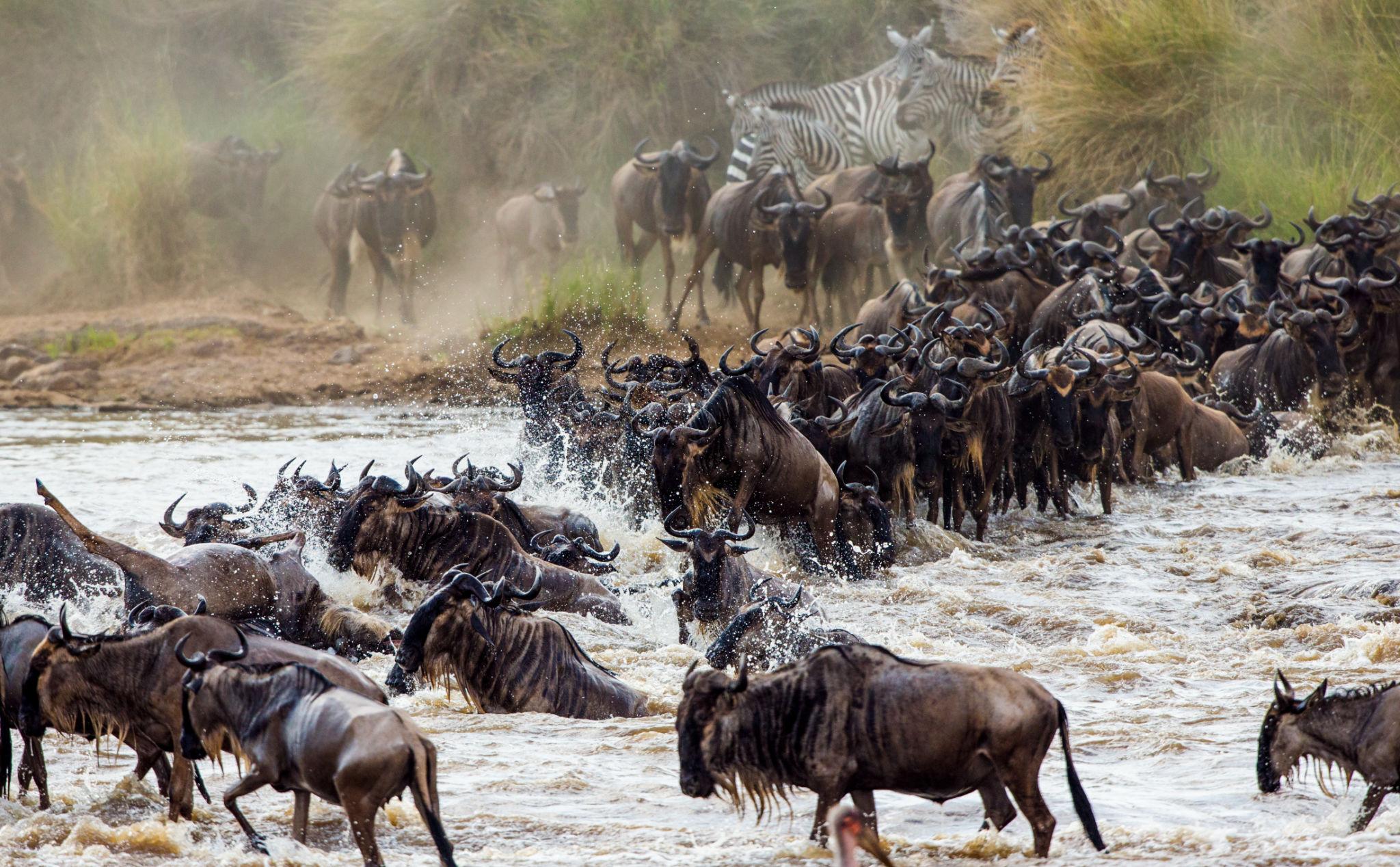
The best safari experiences in Africa are not simply about seeing as many animals as possible. A truly memorable safari changes the way you experience the wilderness—watching wildebeest cross a river, walking through the bush on foot, floating silently above the Maasai Mara or sitting metres
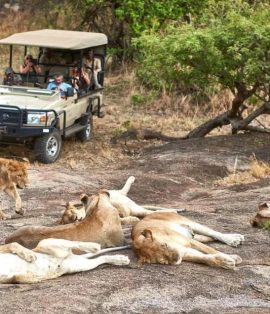
Kenya and Tanzania Safari 2026: Two Countries, One Extraordinary Wilderness. Imagine waking before sunrise to the distant roar of a lion, watching elephants move silently beneath Mount Kilimanjaro by afternoon, and ending another day beneath a Serengeti sky so crowded with stars that darkness never feels