

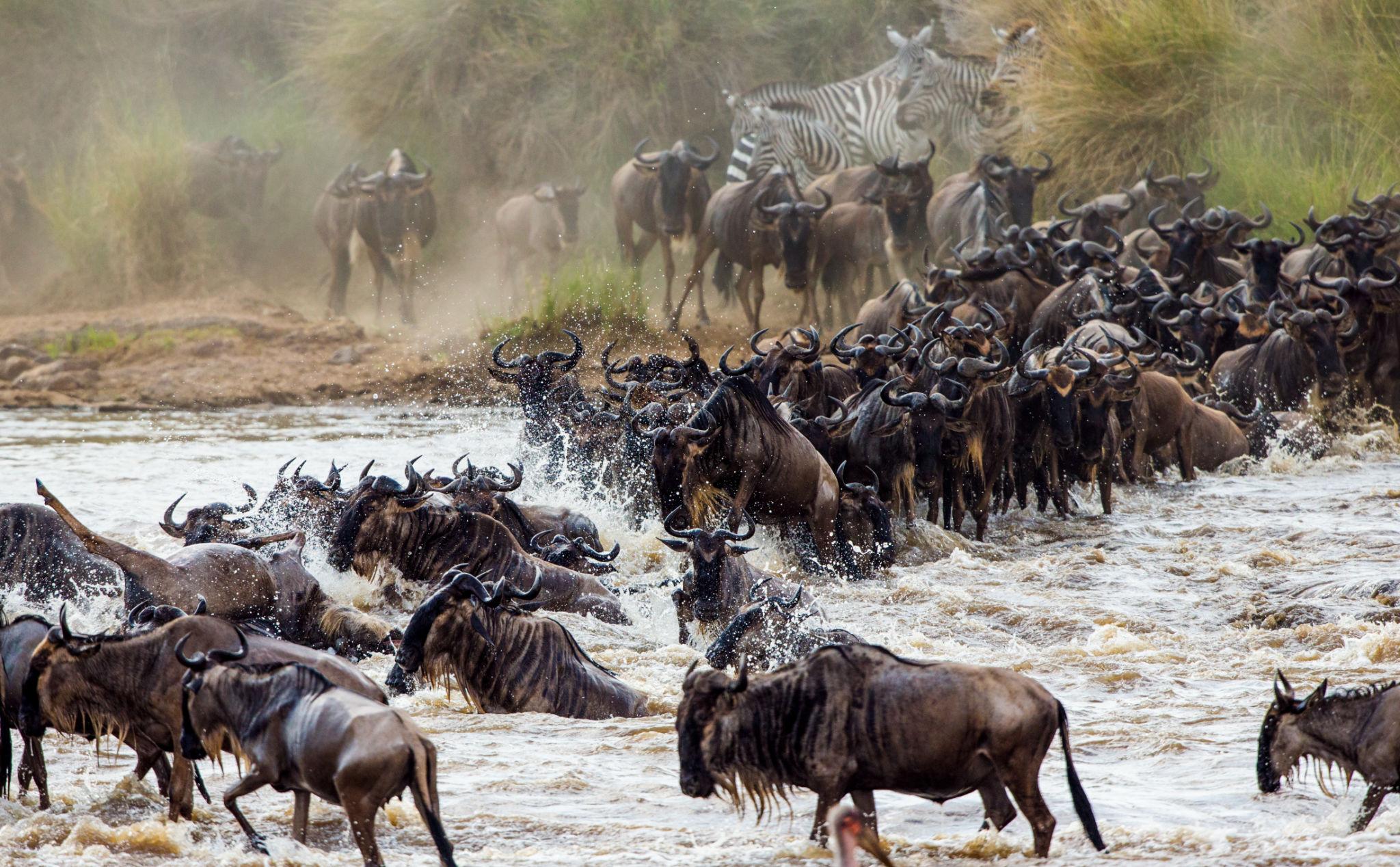
Picture thousands of wildebeest gathering at the edge of the Mara River. For several minutes, nothing happens. Dust hangs above the herd, zebras call from behind, crocodiles wait below, and then one wildebeest jumps.
Within seconds, the river explodes into movement.
It is the scene most travelers imagine when they think about the Great Migration. But here is the detail that can completely change how you plan your safari: the migration does not happen only during the river-crossing season.
The Great Migration is a continuous, year-round movement through the wider Serengeti-Mara ecosystem as wildebeest, zebras and other grazing animals follow water and fresh pasture. Kenya’s official tourism platform describes it as a year-round phenomenon, while UNESCO identifies the Serengeti migration as a roughly 1,000-kilometre annual circular movement spanning Kenya and Tanzania.
So, the best time to visit Maasai Mara and Serengeti depends less on finding one perfect month and more on deciding which chapter of the migration you want to witness.
For some travelers, that is a dramatic Mara River crossing. For others, it is watching thousands of newborn calves on Tanzania’s southern plains or seeing vast herds moving through the Serengeti with far fewer safari vehicles around them.
Let’s break down the migration season properly.
The Maasai Mara in Kenya and Serengeti National Park in Tanzania are often marketed as separate safari destinations, but ecologically they belong to the same wider system.
UNESCO notes that the Serengeti ecosystem extends north into Kenya’s Maasai Mara and that the migration moves between the two countries in search of pasture and water.
That means asking whether the migration is “in Kenya or Tanzania” is really asking:
Where are the main herds likely to be during the month I plan to travel?
| Period | Main Migration Area | What You May Experience | Best For |
|---|---|---|---|
| January–March | Southern Serengeti & Ndutu | Calving, large herds, predators | Photography, newborn wildlife |
| April–May | Central/Western Serengeti | Green landscapes, moving herds | Lower crowds, scenery |
| June–July | Western & Northern Serengeti | Herd movement and river crossings | Migration action |
| Late July–September | Northern Serengeti & Maasai Mara | Mara River crossings, huge herds | Classic Great Migration safari |
| October | Maasai Mara/Northern Serengeti | Late crossings and southward movement | Migration + fewer peak crowds |
| November–December | Central/Southern Serengeti | Returning herds and green season | Photography, quieter safari |
The dates are guidelines rather than appointments. Rainfall and pasture conditions influence where the animals move, so no reputable safari operator should guarantee that a particular river crossing will occur on a specific day.
If your idea of the Great Migration is enormous herds surrounded by newborn animals and intense predator activity, January through March can be one of the most rewarding periods of the entire year.
During this period, large concentrations of wildebeest gather on the short-grass plains of the southern Serengeti and around the Ndutu region.
Tanzania National Parks’ 2026 tourism publication specifically highlights January to March as the wildebeest calving season in the southern Serengeti and describes the Ndutu area and surrounding short-grass plains as the centre of this extraordinary event.
The reason the herds favour this landscape is fascinating.
The soils of these southern plains were influenced by volcanic material, producing nutrient-rich grasses valuable to pregnant and lactating wildebeest. TANAPA’s migration guidance identifies these short-grass plains between the Ngorongoro highlands and Serengeti as important calving habitat.
This period gives you something river-crossing season cannot: new life on an enormous scale.
Young wildebeest must become mobile extremely quickly, while lions, cheetahs, hyenas and other predators take advantage of the sudden abundance of vulnerable prey.
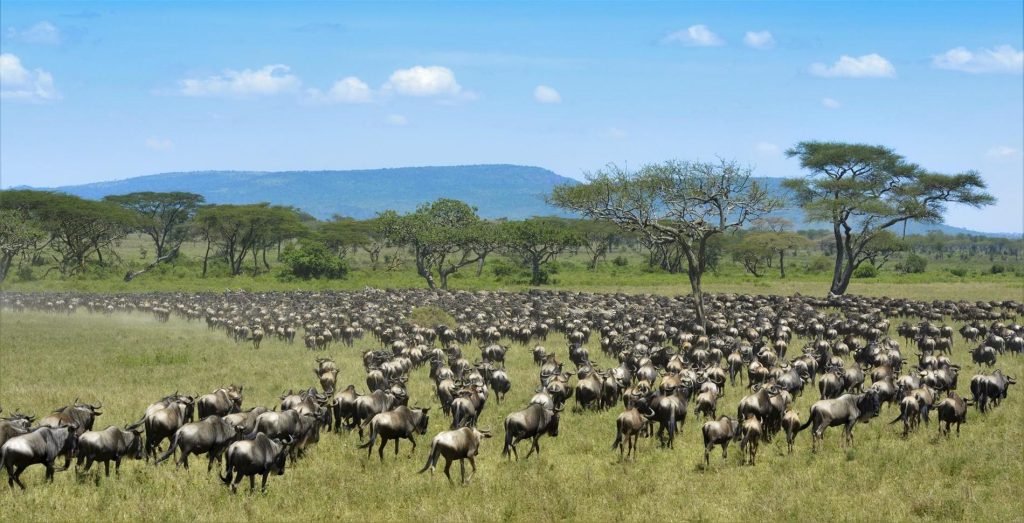
For wildlife photographers, this can produce extraordinary behavioral encounters rather than simply photographs of animals standing beside a safari vehicle.
Best choice for: photographers, predator enthusiasts, repeat safari travelers and visitors wanting a different Great Migration experience.
Suggested internal link: Southern Serengeti and Ndutu safari packages.
April and May are rarely the first months promoted in glossy safari advertisements.
That does not mean they should automatically be avoided.
Rain transforms sections of the Serengeti into intensely green landscapes, and the migration begins shifting away from the southern plains as grazing conditions change.
This period can mean wetter roads and occasional disruption to game drives, but it may also provide something increasingly valuable in famous safari destinations: space.
Fewer visitors can create a slower, more intimate safari experience.
Instead of several vehicles converging on a predator sighting, you may have more opportunities to sit quietly, observe behavior and photograph wildlife against lush backgrounds.
For travelers whose priority is not a Mara River crossing, the green season can represent an excellent balance between wildlife, scenery and lower visitor density.
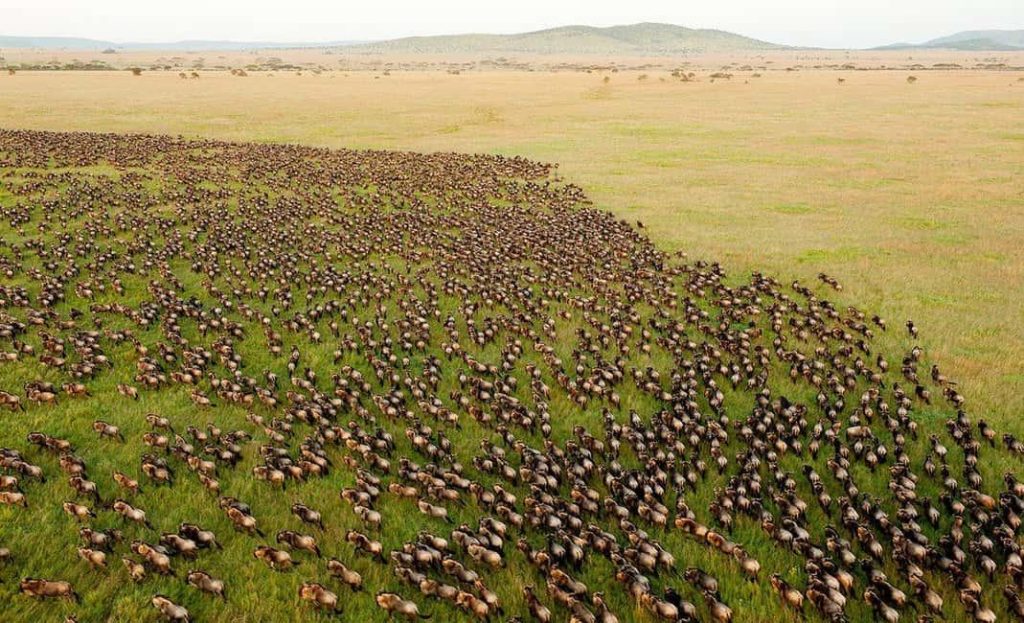
As conditions become drier, the migration progresses through the Serengeti.
Large herds may move through the western and central sections before pushing farther north.
By this stage, safari becomes increasingly dynamic.
Long columns of wildebeest stretch across the plains, zebra travel alongside them, predators follow, and different river systems create challenging obstacles.
July is particularly interesting because it can act as a transition month.
Some herds may already be reaching the northern Serengeti while others remain farther south. This makes location selection especially important.
If traveling during this period, avoid choosing accommodation simply because it says “Serengeti.” The park is enormous, and staying in the wrong sector can result in long drives to reach the migration.
A well-designed itinerary should place you near where the herds are expected, not merely inside the correct national park.
That small distinction can dramatically improve a migration safari.
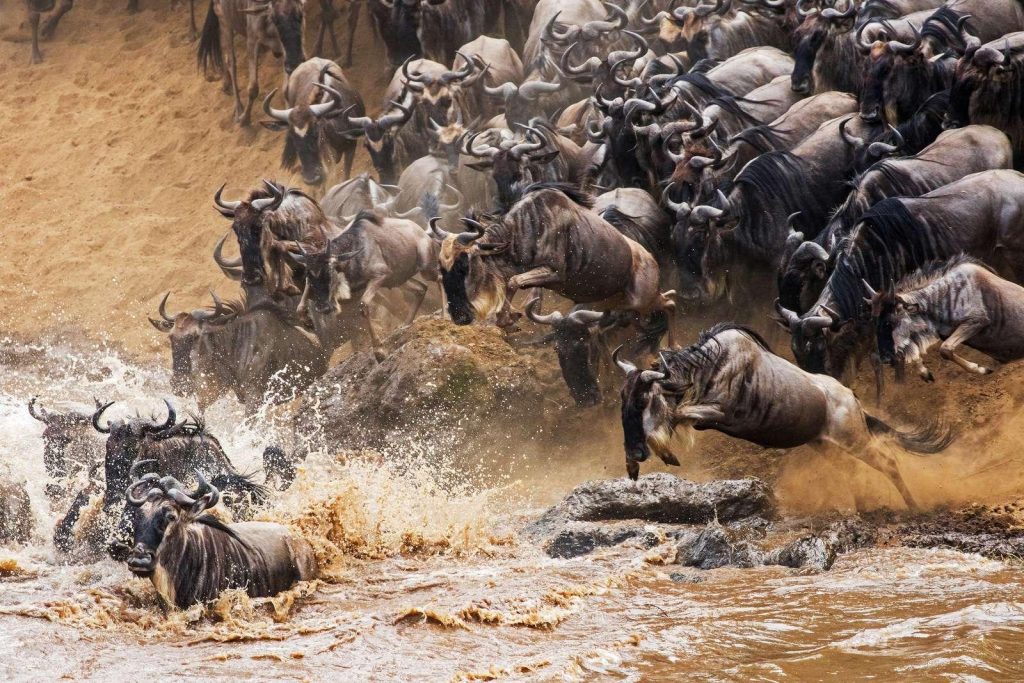
For travelers whose dream is specifically to witness the dramatic river crossings shown in wildlife documentaries, late July through September is usually the strongest period to consider.
Kenya’s official tourism website identifies July to October as the most dramatic phase of the migration in the Maasai Mara, when wildebeest and zebras move through the Mara River system.
Meanwhile, northern Serengeti also offers access to the Mara River and possible crossings before, during and after animals enter Kenya.
This creates an important planning decision:
Choose the Maasai Mara if you want to combine migration viewing with Kenya’s classic safari experience and potentially explore surrounding conservancies.
Choose northern Serengeti if you want the possibility of river-crossing action while remaining within Tanzania’s vast Serengeti wilderness.
Choose both if your budget and time allow.
Because the animals recognize no international border, a combined Kenya-Tanzania itinerary gives you greater geographic flexibility.
But there is one expectation worth correcting.
You may arrive beside the Mara River and find thousands of wildebeest standing on the bank.
They might cross five minutes later.
They might wait five hours.
They might suddenly turn around.
That uncertainty is part of what makes the experience genuine.
The best safari strategy is therefore not to rush between locations but to allocate enough time in migration country for nature to work on its own schedule.
If someone asked for one month that provides a strong overall chance of enjoying the Maasai Mara and northern Serengeti migration experience, September would be high on my list.
Why?
The migration season is well established, the Maasai Mara typically has significant wildlife activity, northern Serengeti can still provide excellent opportunities, and the wider ecosystem remains extremely productive.
The trade-off is popularity.
Peak migration months attract travelers from around the world, particularly around famous river-crossing areas. Accommodation can become expensive and the best camps may book well in advance.
This is why travelers planning a 2026 migration safari should focus not only on when they travel but also where they stay within each ecosystem.
Location can matter more than the number of stars beside a lodge’s name.
October deserves more attention.
Kenya Tourism Board still includes October within the Maasai Mara’s principal migration window.
Depending on rainfall, some herds may remain within the Mara ecosystem while others begin moving south toward Tanzania.
That uncertainty can actually make October appealing to travelers willing to trade the highest probability of peak river-crossing drama for a potentially more relaxed safari.
The month can work particularly well for visitors who want to combine migration wildlife with other Kenyan or Tanzanian parks rather than making the entire holiday dependent on one event.
As seasonal rains refresh grazing areas farther south, the migration gradually continues toward central and eventually southern Serengeti.
This is the stage many people forget.
The Great Migration has not “ended.” It has simply moved into another phase.
UNESCO’s description of the Serengeti emphasizes that the migration is a circular ecological process driven by the search for pasture and water rather than a one-direction journey from Tanzania into Kenya.
Green landscapes begin returning, young grass develops, and wildlife spreads through different sections of the ecosystem.
For photographers who prefer dramatic skies, greener scenery and fewer peak-season crowds, November and December can be surprisingly rewarding.
There is no single answer—but there is a best period for each type of traveler.
| Your Main Goal | Best Period to Consider | Where to Focus |
| Calving and newborn wildebeest | Jan–Mar | Southern Serengeti / Ndutu |
| Predator action | Jan–Mar | Southern Serengeti |
| Green landscapes and fewer crowds | Apr–May | Serengeti |
| Moving herds | Jun–Jul | Western/Northern Serengeti |
| Mara River crossings | Jul–Sep | Northern Serengeti / Maasai Mara |
| Classic Maasai Mara migration | Aug–Sep | Maasai Mara |
| Migration with shoulder-season appeal | October | Maasai Mara / Northern Serengeti |
| Returning herds and green scenery | Nov–Dec | Central/Southern Serengeti |
For a first-time visitor determined to see the classic Great Migration, I would favour August or September.
For serious wildlife photography, February deserves equal consideration because calving creates exceptional predator-prey behavior.
And for travelers who dislike crowds, the “best” time may be completely different.
This may be the most important advice in this guide.
A successful safari should still be extraordinary even if you do not witness a river crossing.
The Serengeti is a UNESCO World Heritage landscape supporting enormous wildlife diversity and major predator-prey interactions throughout the ecosystem. TANAPA likewise emphasizes that Serengeti’s appeal extends beyond the migration and remains strong throughout the year.
The Maasai Mara also offers outstanding resident wildlife.
Lions do not disappear when wildebeest move south.
Neither do elephants, giraffes, cheetahs, hyenas, hippos, antelope and the hundreds of bird species that make these ecosystems remarkable.
Think of the migration as the headline, not the entire newspaper.
Trying to “see the migration” during a single rushed game drive is one of the easiest ways to leave disappointed.
For a dedicated migration experience, consider spending several nights in the area where the herds are expected rather than constantly changing camps.
A longer stay gives you time to observe animal behavior, return to productive locations and wait when the wildlife refuses to cooperate with your schedule.
If combining Kenya and Tanzania, build the itinerary around wildlife geography, not simply country names.
For example, northern Serengeti and Maasai Mara make natural migration partners during the river-crossing season, while southern Serengeti and Ngorongoro work particularly well during the calving period.
Choosing the best time to visit Maasai Mara and Serengeti begins with understanding that the Great Migration is not a single event.
It is a continuous story.
January brings newborn calves to the southern Serengeti. The herds gradually move north as conditions change. By the middle of the year, massive columns advance through Tanzania. Later, the Mara River becomes the stage for some of Africa’s most dramatic wildlife encounters before the animals eventually begin their journey south again.
That is why there is no genuinely “bad” migration month.
There are simply different experiences.
If witnessing a Mara River crossing is your dream, target July through September, with August and September particularly attractive for a classic migration itinerary.
If you want calves, predators and dramatic wildlife behavior, consider January through March.
And if you value green landscapes and fewer visitors more than famous river crossings, look beyond peak season.
Ultimately, the best safari is not the one that forces wildlife into your calendar.
It is the one that puts you in the right ecosystem and gives nature enough time to surprise you.
Masai Mara Safari Guide 2026: Best Time, Cost & Tips
Whether you want to watch newborn wildebeest take their first steps in the southern Serengeti, follow immense herds north across Tanzania or wait beside the Mara River for that unforgettable crossing, choosing the right dates can transform your safari.
Explore our Maasai Mara safari packages, discover our Serengeti safari itineraries, or speak with our safari specialists about creating a combined Kenya and Tanzania Great Migration safari based on your travel dates, budget and wildlife priorities.
Which Great Migration experience is on your bucket list, the calving season or the Mara River crossings?
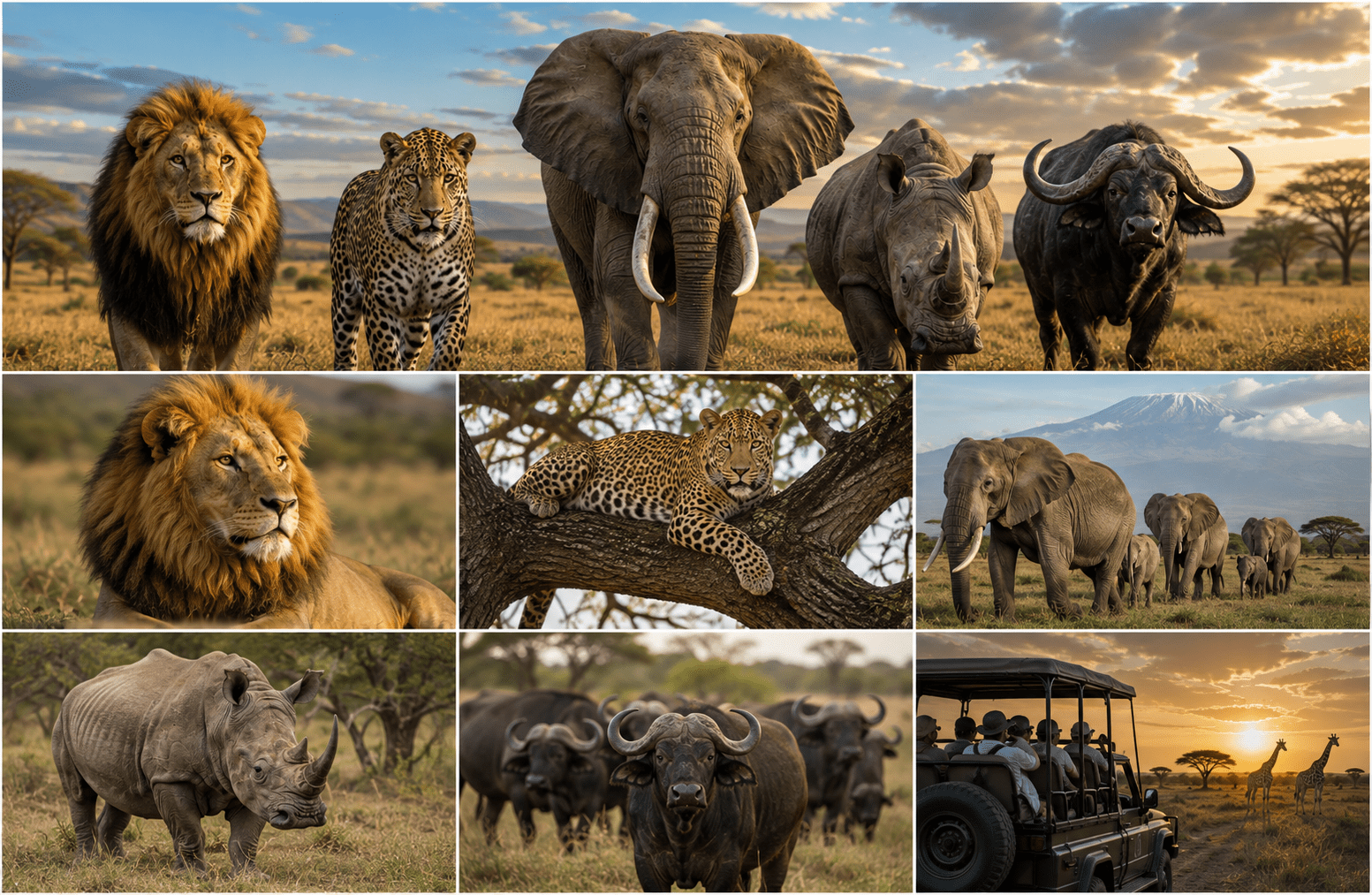
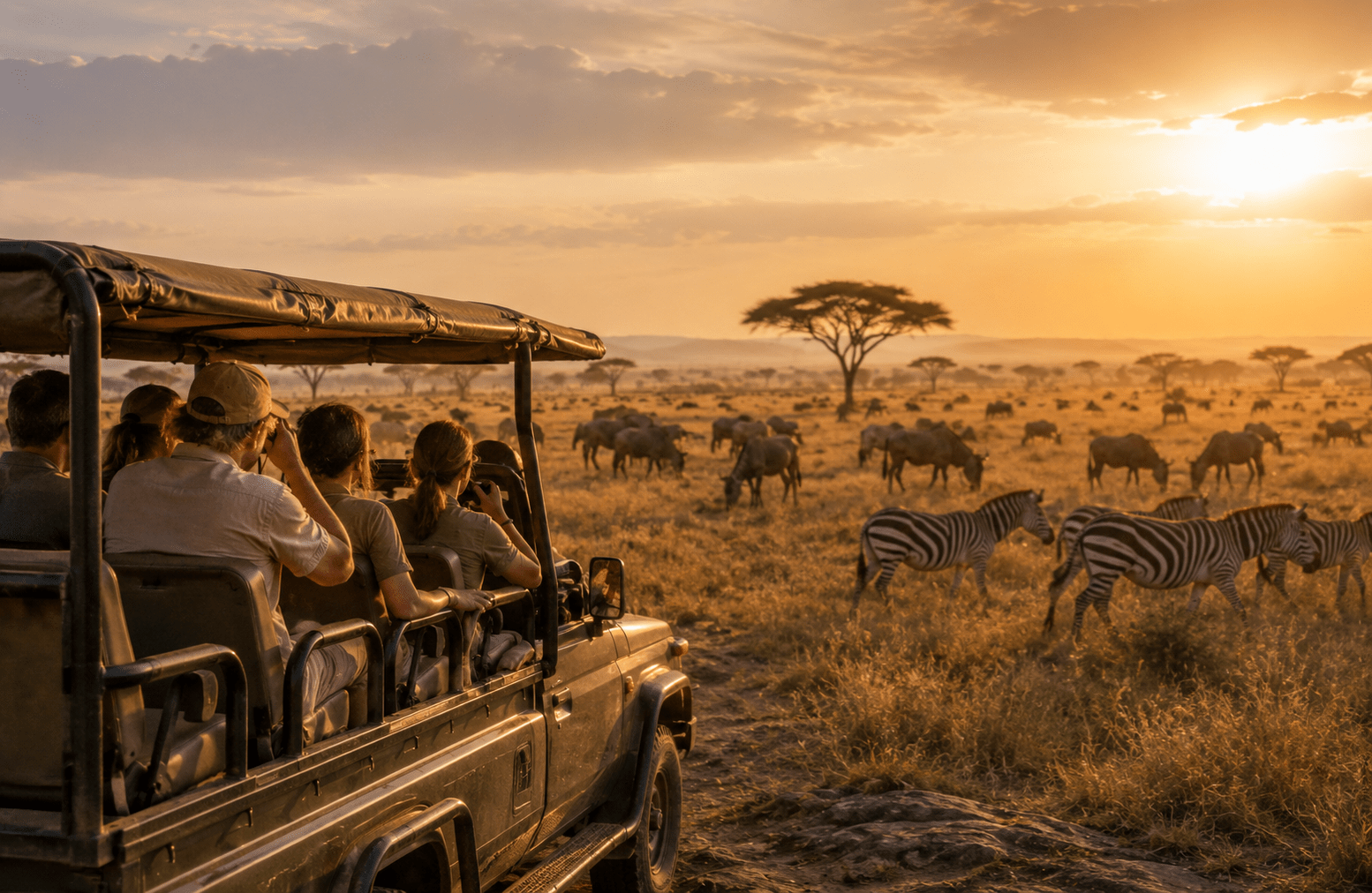
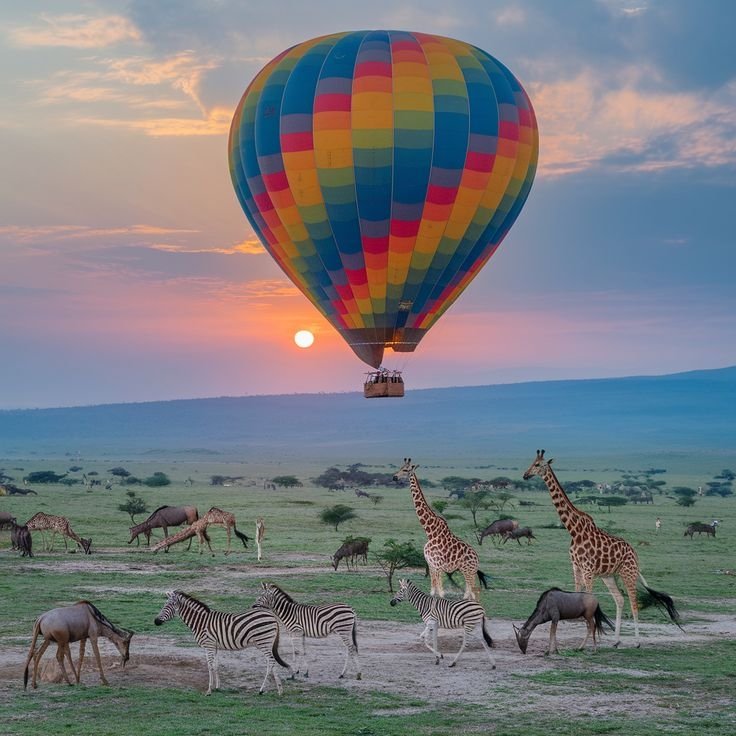
A Big Five Safari often begins with a simple dream: seeing a lion, leopard, elephant, rhino and buffalo roaming freely in the African wilderness. But the moment you actually arrive on the savannah, something changes the checklist suddenly feels far less important than the experience unfolding
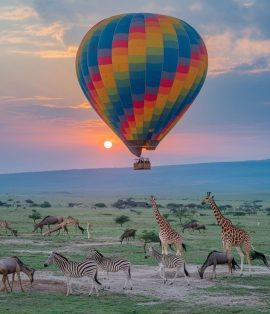
The best safari experiences in Africa are not simply about seeing as many animals as possible. A truly memorable safari changes the way you experience the wilderness—watching wildebeest cross a river, walking through the bush on foot, floating silently above the Maasai Mara or sitting metres